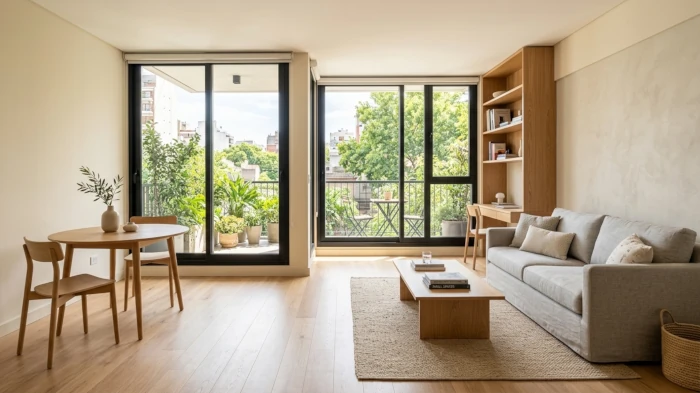
The size of a room doesn’t define the feeling it conveys. Often, large apartments feel cramped, while small spaces can be airy, functional, and extremely pleasant.
The problem isn’t the number of square meters; it’s how they’re used. Designing small spaces that feel spacious is a combination of strategic decisions, from technical layout to visual perception. In this article, we’ll show you the key architectural and interior design principles to achieve this.
💡 1. Reduce visual noise to gain space
One of the most common mistakes in small spaces is clutter. Too many objects, contrasting colors, and competing elements make the space feel smaller than it actually is.
The solution: Simplify. Choose fewer items, but with intention. Prioritize the essentials and eliminate what doesn’t contribute. When the eye rests, the space expands.
💡 2. Working with a coherent color palette
The use of color has a direct impact on perception. Environments with too much contrast tend to appear visually fragmented. In contrast, a coherent palette creates continuity.
Base Studio Recommendation:
- Use similar tones (tone-on-tone).
- Avoid abrupt visual breaks between walls and ceilings.
- Integrate furniture and textiles within the same color palette.
💡 3. Optimize furniture layout
It’s not just about what’s in the space, but how it’s organized to avoid blocking circulation or creating chaos. Every element must have a clear purpose.
You can see how we apply these optimization strategies in our Residential Projects.
💡 4. Opt for multifunctional design and furniture
In Buenos Aires apartments, every square meter counts. That’s why your furniture should work in your favor.
Examples: Beds with built-in storage, folding tables, or shelving units that double as lightweight room dividers. Smart design is also key in offices and commercial spaces. Check out our Commercial Projects.
💡 5. Use light strategically
Lighting has a radical influence on the atmosphere. Well-lit spaces feel more open. Making the most of natural light and complementing it with indirect lighting avoids harsh shadows that make corners feel smaller.
💡 6. Create seamless visual continuity
One of the secrets to making a room feel larger is avoiding unnecessary partitions.
Tip: Using the same flooring throughout the apartment and integrating materials helps the space feel continuous and expansive.
💡 7. Designing with intention (Neuroarchitecture)
Beyond technical rules, the most important thing is intention. A well-designed space isn’t the one with the most things, but the one that works best for its inhabitants. Applying principles of psychoarchitecture allows each decision to respond to a real need, making the home more livable.
💡 Your next step!
Now, the best way forward is to contact us for professional advice. We want to help you bring your dream space to life, whether for investment or to live in Buenos Aires and the surrounding area.
If you enjoyed this content, don’t miss the article: Investing in the Buenos Aires market: Step by step to buy an apartment in Buenos Aires as a foreigner (2026)
And follow us on our social media: LinkedIn, Facebook and Instagram.
This article may contain links from partner brands we love. By purchasing through them, you support Base Studio in continuing to create inspiring content, at no extra cost to you.
