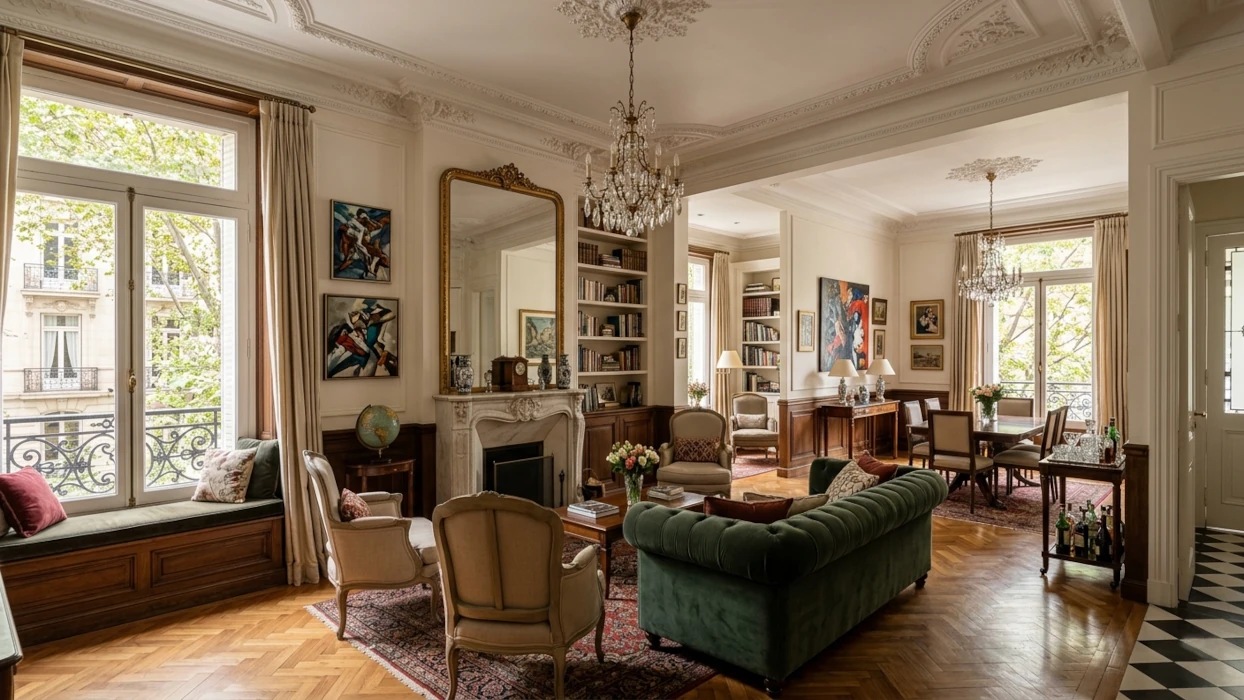
Buenos Aires property prices are still roughly 12% below their 2017–2019 peak, and transaction volumes hit record highs in late 2025. For expats holding dollars or euros, that combination is difficult to ignore. But Argentina’s real estate market comes with specific dynamics that any serious investor needs to understand before committing capital.
This guide breaks down whether Buenos Aires real estate is a good investment in 2026: the numbers, the risks, the neighborhoods that actually deliver returns, and what to watch out for.
💡 Where the Market Stands Right Now
As of February 2026, apartment prices in Buenos Aires average around USD 2,450 per square meter still clearly below the roughly USD 2,800 peak reached in 2017–2019, which means the market has room to grow before looking expensive. TheLatinvestor
Moreover, Buenos Aires property prices rose about 5.6% in USD terms over the past year, marking one of the first sustained recoveries after nearly a decade of decline in real terms. TheLatinvestor That shift in direction matters: after years of price compression, the trend has reversed.
Additionally, transaction volumes exceeded 7,600 deeds in December 2025 alone in Buenos Aires TheLatinvestor, a level of activity that reflects genuine buyer confidence, not a seasonal spike.
💡 The Case For Investing Now
The investment case for Buenos Aires in 2026 rests on three converging factors.
Prices are still discounted. Only about half of the city’s neighborhoods showed monthly price increases by late 2025, which means buyers still have room to negotiate rather than facing aggressive competition everywhere. TheLatinvestor In practice, that translates to real discounts for prepared buyers.
Inflation is stabilizing. Inflation dropped from over 200% annually in late 2023 to around 32% year-on-year in January 2026, which is stabilizing confidence and bringing mortgage credit back into the market. TheLatinvestor For foreign investors transacting in dollars, this matters less directly, but it signals a more predictable operating environment.
The five-year outlook is positive. As of early 2026, property prices in Buenos Aires are expected to grow by 20% to 35% cumulatively over the next five years in USD terms, assuming Argentina maintains its current path toward macroeconomic stability. TheLatinvestor Furthermore, premium neighborhoods like Palermo, Recoleta, and Puerto Madero could potentially see gains of 8% to 12% over the next 12 months due to stronger foreign investor interest. TheLatinvestor.
💡 Rental Yields: Honest Numbers
Buenos Aires real estate is primarily a capital gains play rather than a cash-flow investment, rental yields are low except in some very local neighborhoods. Global Property Guide That’s an important distinction from markets like Medellín or Lisbon, where yield-focused investors have more options.
That said, gross rental yields in Buenos Aires range from 5% to 8% citywide, with higher yields typically found in less premium neighborhoods and older properties. 4rentargentina Specifically:
- Villa Lugano delivers yields of 7% to 8%, driven by very low purchase prices relative to rent income The Wandering Investor
- Parque Patricios near the Distrito Tecnológico sits around 5.5% to 6.5%, with steady tenant demand from tech workers The Wandering Investor
- Premium areas like Palermo and Recoleta deliver closer to 4% to 5%, but with significantly lower vacancy and stronger resale liquidity
For short-term rentals, top-performing Airbnb properties in Palermo Soho, Recoleta, and San Telmo generate between USD 1,200 and USD 2,500 per month, with average daily rates around USD 100 to USD 180. The Wandering Investor
💡 The Risks You Need to Price In
No honest guide to Buenos Aires real estate skips the risks. There are three that matter most for foreign investors.
Currency volatility. Currency risk remains the most significant threat to Buenos Aires property investments, with Argentina’s historical pattern of devaluation episodes creating substantial volatility in real estate values. 4rentargentina All transactions are conducted in USD, which provides a natural hedge, but peso-denominated costs (taxes, maintenance, management fees) can shift significantly.
Negotiation complexity. In Buenos Aires, listing prices are typically about 7% higher than final closing prices, meaning a property listed at USD 140,000 usually sells closer to USD 130,000. TheLatinvestor Consequently, buyers who don’t negotiate aggressively systematically overpay.
New construction premium. New construction apartments cost approximately 12% to 20% more per square meter than comparable existing units in the same neighborhood. TheLatinvestor That premium is sometimes justified, modern layouts, building amenities, fewer surprise repairs. In other cases, it simply reflects developer margin. Knowing the difference requires local expertise.
💡 Which Property Types Perform Best
Not all Buenos Aires real estate performs equally, and understanding what to buy is as important as where to buy.
The property type most likely to underperform in Buenos Aires in 2026 is small studios in central neighborhoods, because they lack the space premium and face competition from a large existing supply. TheLatinvestor In other words, the obvious entry-level play is also the most crowded.
Better options for foreign investors in 2026 include two-bedroom apartments in gentrifying neighborhoods like Villa Crespo and Chacarita, where price appreciation has run roughly 5% to 10% over the past year, outperforming the citywide average. The Wandering Investor Additionally, properties requiring renovation consistently attract motivated sellers willing to negotiate, which is where real discounts are found.
At Base Studio, renovation is precisely where we add measurable value, from design and material sourcing through to construction management. Explore our residential portfolio to see recent renovation projects across Buenos Aires.
💡 Setting Up Your Investment Property
Once you close on a property, the next step is preparing it to rent or resell at maximum value. Beyond the design and renovation work, there are immediate practical needs: basic furnishing, kitchen essentials, cleaning supplies, and the small items that make a space liveable and rentable fast.
Platforms like TEMU Argentina are a convenient option for sourcing affordable household basics quickly, particularly useful when you’re setting up a rental property and need to stock it efficiently without overspending on items that tenants simply need to be present. It’s a practical first layer before investing in longer-term furniture and finishes.
💡 What Does USD 100,000 Buy You?
With USD 100,000 in Buenos Aires, you can purchase a 40-square-meter one-bedroom apartment in Almagro or a larger 60–70 square meter unit in La Boca. TheLatinvestor For investors targeting Palermo or Recoleta, that budget reaches a compact studio, though renovation potential can significantly increase the end value.
For reference, the median price for a typical 50-square-meter two-bedroom apartment in Buenos Aires sits around USD 129,000 in 2026. TheLatinvestor That’s the realistic entry point for a well-located investment property in a mid-tier neighborhood.
💡 Frequently Asked Questions
Is Buenos Aires real estate a good investment in 2026?
For buyers holding dollars or euros, Buenos Aires offers a rare combination: prices still below their historical peak, a market in early recovery, and gross rental yields of 5% to 8% citywide. The main risks are currency volatility and transaction complexity. As a capital gains play rather than a pure yield investment, it suits investors with a medium-to-long time horizon of three to five years or more.
What is the average property price per square meter in Buenos Aires in 2026?
The citywide average sits around USD 2,450 per square meter for apartments. Premium neighborhoods like Palermo range from USD 2,880 to USD 3,900 per square meter, while more affordable areas like Caballito sit between USD 1,480 and USD 2,000 per square meter. Puerto Madero is the outlier at around USD 6,100 per square meter.
Can foreign investors buy property in Buenos Aires without restrictions?
Yes. Foreigners can hold 100% ownership of urban residential property in Buenos Aires under their own name, with no quotas, no foreign ownership surcharges, and no restrictions compared to local buyers. The main requirement is obtaining a CDI (tax identification number for non-residents) before closing.
💡 Ready to Take the Next Step?
Ahora, el mejor camino es ponertepara recibir asesoramiento profesional. Queremos ayudarte a materializar tu espacio, ya sea para invertir o para vivir en Buenos Aires y alrededores. contacto con nosotras for professional advice. We want to help you bring your dream space to life, whether it’s for investment or to live in Buenos Aires and the surrounding area.
Si te gustó este contenido, no te pierdas el artículo: The 5 Best Neighborhoods in Buenos Aires for Expats to Live or Invest (2026).
Follow us on Instagram, LinkedIn e Facebook.
This article may contain links from partner brands we love. By purchasing through them, you support Base Studio in continuing to create inspiring content, at no extra cost to you.
